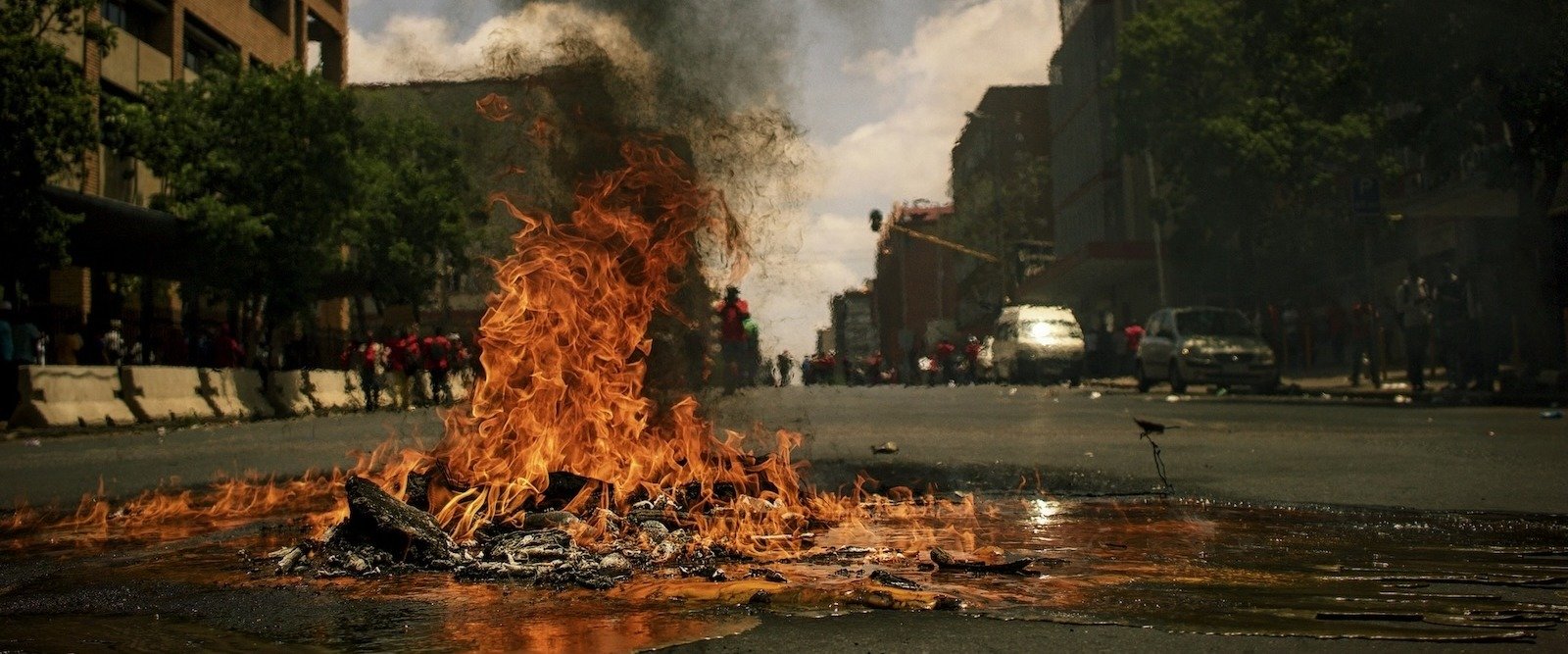
NEW CONFLICT LABELS
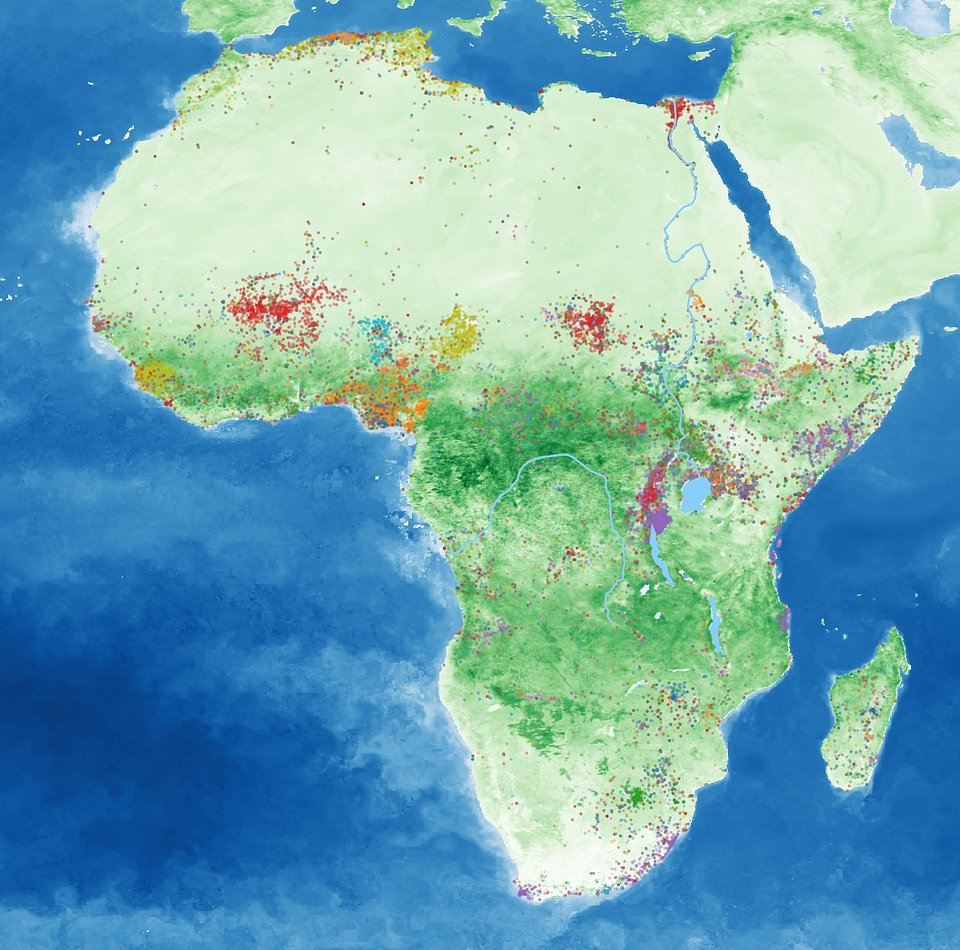
Spatial distribution of conflict avalanches across Africa from 1997 to 2025. Conflict avalanches are non-heuristic, data-derived chains of conflict events linked in space and time. Here, each point represents a conflict event, with colors distinguishing distinct conflict avalanches. The green background denotes the Normalized Difference Vegetation Index (NDVI), highlighting underlying patterns in vegetation and environmental context across the continent.
THREE TYPES OF CONFLICT
- Major unrest: Conflicts such as the Boko Haram insurgency or the Central African Republic civil war belong to this category, characterized by sprawling, long-lasting violence in densely populated, well-connected regions that often cross national borders.
- Local conflict: Conflicts such as the Seleka and anti-Balaka conflict belong to this category, characterized by geographically contained disputes within a single country that typically span months rather than years.
- Sporadic / spillover events: Incidents such as the spillover of the Al-Shabaab insurgency into parts of Somalia belong to this category, characterized by short-lived, low-population flashpoints in remote or underdeveloped areas.
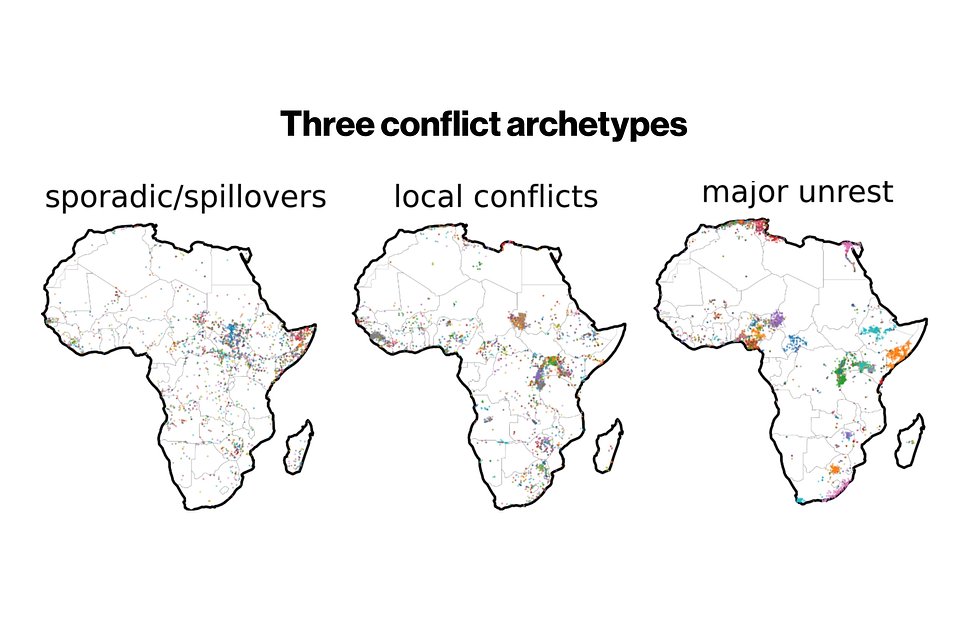
Three conflict archetypes across Africa. The panels depict sporadic/spillovers, local conflicts, and major unrest, identified using empirical conflict data and a non-heuristic, algorithmic approach. Colors indicate distinct conflict avalanches. Conflict avalanches are non-heuristic, data-derived chains of conflict events linked in space and time.